
Imported from legacy ID 68964

Screening Plants - Types, Working Principle & Applications

Definition

Screening is the process by which granulated ore material gets separated into different grades of particle size. In other words, it’s a mechanical process that stratifies (divides) particles according to a required size. Once particles have been divided, the screening surface opening then accepts or rejects the particles.

A “Screen” can be simply defined as a machine with surfaces that are used to classify materials by size. For example - In a mining process, a screening plant is a type of machine used to extract ores from the ground using water and sedimentation processing.

Screeners are designed to provide high-capacities, in various industries ensuring optimum productivity of your production process at a low maintenance cost.

Following are the key factors you must consider for your screening plant  

  • Size and type of material for screening
  • Application and use of the crushed material


Applications

As explained above, the most common application of a screen is to separate a conglomerate of materials into different size fractions. Other popular uses of screens are dewatering, scalping, dedusting, and washing.

Screeners form an essential stage of any mechanical process and are used in a range of industries including mining and mineral processing, agriculture, pharmaceutical, food, plastics, and recycling.


Working principle

Let us now understand how a screening machine works. A screening machine has an inbuilt drive that induces vibration and a screen media that helps in particle separation. There is a deck which holds the screen media and the drive and is basically the mode of transport for the vibration.

A simple example is a single deck screen with an inclined frame. This inclined frame is mounted on springs. When the vibration is generated from an unbalanced flywheel it results in a very erratic motion which is developed due to the rotation of the wheel. This type of screen will typically be used in smaller operations and rock quarries where sizing is not the key consideration. Freefall screening is based on the theory of free fall of the material through and over the Deck i.e. in this way no particle layer will build upon the screen deck.

There are various physical factors that affect the screening process. For example, vibration, g-force, bed density, and material shape. Sticking and Plugging can be caused due to water attraction. Further, Electrostatic forces can also affect screening efficiency. A very dry material can also generate a charge that causes it to attract to the screen itself.


Common Vibrating Screen Applications

Various kind of screens and their applications are mentioned below:

  • Scalping Screen: When a feed is mostly finer, this type of screen is used to remove a small amount of oversize without taking into account crushed product sizes.
  • Sizing Screen (Dry and wet): When there is a need to produce material sizes that meet requirements in particular range of sizes, the sizing screens are used. They mostly operate at a high and constant rate of efficiency.
  • Washing screens: These screens are built to facilitate water usage wherein water can be sprayed on the material. Usually, water is used to clean material and /or assist in the sizing as well.
  • Dewatering screen: These kinds of screens are simply used to remove liquid from material
  • Rescreen Screen (Dry and wet): Often screened material still have contaminants. These screens are used to remove contaminants from already screened materials.


Types of Screens

Screens are classified on the basis on pattern into Horizontal, Circular, Inclined and Rotary. They are further explained as below:

  • Horizontal screens: These screens vibrate back and forth facilitating removal of larger ores by this vibratory movement. These screens have a huck bolted construction and power are generated through timed shafts with eccentric counterweights. Ideal for wet washing or low head operations.
  • Circular screens: These type of screens are also called circular-motion vibrating screens. They are commonly used to classify medium to coarse-grained bulk materials (5.0 mm to 100 mm) for screening. Circular vibrating screens operate using indirect excitation of the screen mesh. Because of unbalanced massed, there is a circular vibrating motion and that is how the screen frameworks. For a specific transport speed, the circular vibrating system may be tilted at different angles. However, the optimum angle has been 15° to 30° usually used in practice.
  • Inclined screens: It's a single deck screen which is put on an inclined frame and uses gravity to help move material downwards and a circular stroke helps to classify the material for further sizing. The frame is mounted on springs. The vibrations are generated from an unbalanced flywheel. Inclined screens are commonly used for crushing rocks, sand , and gravel; recycling; ore processing; wet screening and for the chemical industry.
  • Rotary screens: A common usage of rotary screens is the separation of solid pollution in wastewater. Rotary screens are equipped with a slot-tube, which are rods in axial directions of the tube. Owing to the gravitational force, waterfalls on the slots tube and passes through slots. The solid material that does not fit the slot is a residual which is on the exterior of the rotating slot tube and it is scrapped and falls down in a container. Finally, treated water flows out from the lower part of the rotary screen. A rotary screen is commonly used in food-processing industry such as meat-processing factories, slaughterhouses, dairy works, canning factories etc.
  • Wash Plants In simple words, a Wash plant is defined as a plant where slimes are removed from relatively coarse ore by washing, tumbling, or scrubbing.

Nowadays, Portable crushing & screening plants are commonly used for rock crushing in quarries and mines. They are more efficient in terms of time and resource since they can quickly move with ease around the job site by remote control features and can be moved from one location to another as well.


Conclusion

With screeners, there are several other terms which are frequently used such as blinding, contamination, frequency, amplitude, and others which describe the basic characteristics of screening, and these features further define the overall process of dry or wet screening.

As also mentioned earlier, the way a deck is vibrated differentiates screens. Different types of motion have their advantages and disadvantages. In addition, media types also have their different properties that lead to advantages and disadvantages.


View Full Screen Inventory 


Finally, there are problems and challenges associated with screening. Screening efficiency is often affected by Screen tearing, contamination, blinding, and dampening.

Leading manufacturers of screeners include McCloskey, Masaba, Kleemann, Nordberg, Sweco, Terex, Metso (Allis Chalmers), Sandvik, Telsmith, Deister, JOST , and Derrick.

However, a thorough research of the screening plant which suits your process is essential before buying one.

We will help you buy the most suitable trommel for your operation, contact us today.  


News categories

Thickeners

THICKENERS

The purpose of this article is to understand the meaning of Thickeners, its origination, purpose, operation, types of thickeners and factors determining the efficiency of a thickener.


What is a Thickener?

In very simple words, a thickener is a machine that separates liquid from solids. It is defined as a method of continuous dewatering of a dilute pulp, wherein a regular discharge of a thick pulp takes place which is of uniform density, concurrently with an overflow of clarified solution. The solids particle size range in thickeners is generally from 0.5 mm to a few microns. Thickeners are often rated on lbs. of solids per square foot of surface area.


Briefly, its functioning can be explained with Scraper blades or “rakes” that are used in a thickener, which rotate slowly over the bottom of the tank, and slope down towards the centre and move the material settled on the bottom to a central opening or discharge. Thickeners are generally used in metallurgical field with the purpose of thickening prior to agitation, filtration, in the countercurrent washing of cyanide slime, and more thickening ahead of floatation, for dewatering tailing to recover the water for reuse in the mill and for thickening concentrates.


Fundamentally, thickeners and clarifiers (which look visually like thickeners) are both used to settle solids which results in the separation of liquids and solids. The difference however is that thickeners are used to concentrate solids, while clarifiers are used to purify liquids.


Historically, thickeners were introduced to the mining industry in 1905. They are widely used in various industries including mining, coal, chemical, industrial, environmental (wastewater management), municipal and paper industry.


Working of a Thickener

Let us understand in detail about how thickeners work. To start with, it works on the principle of Gravity sedimentation and the most common construction of a thickener would be of iron or steel.


The continuous thickener consists of a cylindrical tank. Pulp is fed into the centre of the tank via a feed-well placed up to 1 m below the surface of the suspension. The clarified liquid overflows a trough, while the solids which settle at the bottom of the tank are withdrawn as a thickened pulp from an outlet at the centre. One or more rotating radial arms are there within the tank, from each of which are suspended a series of blades, shaped so as to rake the settled solids towards the central outlet.


With modern thickeners, there is a functionality of these arms rising automatically if the torque exceeds a certain value, thus preventing any damage which can result due to overloading. The blades also help in concentration of the settled particles by simple setting which enable a thicker underflow. In this way, solids move downwards, and then inwards towards the thickened underflow outlet and the liquid moves upwards and radially outwards.


Types of thickeners

The thickeners can be classified into two types depending on location of rake driving mechanism. They are known as either Centrally driven or Peripherally driven.

Further, under centrally driven type there are two types depending on method of supporting the drive mechanism and the raking arms.

  1. a)    Column type: A kind of thickener where a central steel or concrete column takes vertically the reaction to the weight of the mechanism and horizontally the torque load.
  2. b)    Bridge type: Here, a structure spans across the tank and is subjected vertically to the weight of the mechanism plus any solids that accumulate within the arms truss and horizontally to the twin forces imposed by the density of the raked underflow.


Generally, and for larger diameters the former type is used and for tanks up to 25-30 meter diameter the later type is preferred.


What are high-capacity thickeners and how they work?

In the 1980’s, machines known as “high capacity” or “high rate” thickeners were introduced by various manufacturers. These machines are characterized by a reduction in unit area requirement for conventional installations.


Here, the feed enters through a hollow drive shaft where flocculent (used to help thickening) is added and is rapidly dispersed by staged mechanical mixing. Further, this staged mixing action helps to improve and enhance thickening. This feed is then added into a blanket of slurry where the feed solids are further flocculated by contacting previously flocculated material. Since there is a direct contact between rising fluid and settling solids, which is common to most thickeners, it is averted with slurry blanket injection. There are radially mounted inclined plates which are partially submerged in the slurry blanket; the settling solids in the slurry blanket slide downwards along the inclined plates, producing faster and more effective thickening than vertical descent. Level sensor are used to automate the height of the slurry blanket.


Factors determining efficiency of Thickener

Several types of thickeners have been developed and classified according to the arrangement of feed and discharge in the various compartments.


For effective thickener control, key considerations are bed mass inventory, underflow density and flow, bed level, overflow clarity and flocculent dosing. All these parameters and measurements of these are not easy and one must factor in accuracy and reliability to select and install the proper equipment. Some of thickening equipment from well-known and respected brand names such as Eimco, FLSmidth, Dorr-Oliver, Phoenix, Lamella and Westech are popularly used.


Choosing a right thickener for your process and industry shall determine efficiency in its output and we strive to help you find one here!


For further queries, please feel free to contact us.


News categories

Trommels

Trommels


This article gives the readers an overview of a Trommel, how it works, applications, advantages and disadvantages.

Definition

In simple words, a trommel is mining equipment comprising of a cylindrical drum that has many holes of a given size. The holes help in classification, and when the drum rotates it only lets the material smaller than the holes fall through while the rest of the material flows out of the other end of the trommel. Trommels are widely known and used popularly around the world on various sized mining operations

Miners worldwide commonly use gold trommels. In a gold trommel, gold-bearing gravel is added to the hopper and it enters the rotating drum that further helps to break apart the material. It is used to help separate and classify out the material for further processing, so as to separate the smaller gold bearing material from the larger substrate like rocks, pebbles and boulders. These can be manufactured in any size to suit the needs of the miner.  

On larger operations, the trommel is generally incorporated into an entire wash plant setup. Generally speaking, to efficiently operate a trommel, two people are required. One person would feed material into the trommel and the other one would clear any discharged waste material so that more material can be fed into the machine.


Application

As mentioned above, Trommels are widely used in gold mines, since they are extremely efficient and very effective at recovering fine gold. The larger-sized models can handle impressive volumes of gold-bearing gravel when operating at peak efficiency. They are often powered by large diesel or electric engine.


Gold Trommel Working

Let us understand in detail how a gold trommel works and how efficiently it can be operated. To begin with, once the trommel is set up, the motor starts rotating the cylindrical drum, the water sprayer also gets activated. Gold-bearing material is added to the hopper and the force of water washes it down or cleans it to break up the material and help separate the gold. The drum keeps on moving round and round. Any pieces of material (rocks and gravel) larger than the drum screen hole size are forced down the drum into the tailings bucket and out, forming a coarse tailings pile at the bottom of the unit. The rest of the gold-bearing gravel falls into the sluice box below, where hydraulic action helps to trap the black sands and gold while allowing the waste to flow out the lower end of the box into additional tailings (fine tailings). Here is when the other person cleans the sluice box. Finally, the concentrates are then run through a concentrator where the gold is recovered.

Since the goal is to completely break apart any clays and mud that could retain placer gold
and prevent it from being caught in the sluice, different designs and amounts of water jets
are used. It is basically, high-pressure water together with the rotating drum which breaks
apart any clays and dirt as the slurry moves through the drum.


Some processes might require a grizzly prior to feeding the trommel in order to separate out the largest boulders. This depends on the quality of your trommel and the type of material that you are feeding into it. Some larger wash plants in large-scale operations have grizzly set up directly over the hopper when the material is added so as to increase the efficiency of the process.

One must find a trommel which is easy to operate and is durable with low maintenance.


Key Components in a Trommel

A gold trommel has the following major components:

Rotating Drum or Cylinder: Mounted at a downward inclined angle, the trommel drum or cylinder is usually constructed of high-grade aluminum, stainless steel, or expanded metal with screens in it typically running 1/4 inch to 1/2 inch. This kind of structure is considered most efficient for gold recovery. Small gasoline engines, batteries, electric motors, or large diesel engines are used to power the drum’s rotation. Diesel engines among these options are the most commonly used.


Metal Frame (including wheels and tow bar or hitch): The frame is the trommel’s metal and supports all the other trommel components. In larger models, a set of wheels is mounted on an axle at the bottom of the upper end of the trommel and a tow bar or hitch at the opposite end


Sluice Box: The trommel sluice box is fitted below the rotating drum. The utility of a sluice box has been explained earlier.


Hopper or "Feeder" Chute:  This is a square or rectangular box attached to the upper end of the trammel is fed with auriferous material.


Drum Side Panels and Tray: Panels play a very important role in the movement of the material. The panels ensure that the material does not fall from the sides of the turning drum and the tray pushes the gold-bearing material through the trommel screen holes in and downward toward the sluice box.


Sprayer: Available in various forms, the most common type of sprayer is a length of perforated PVC or metal piping that is fixed in place near the top of the drum which is independent of the drum’s rotation. Its working is simple, water is fed into the piping via a pump and length of hose, or less frequently, by gravity.


Tailings Tray or Chute: The tailings tray also known as chute is attached to the lower end of the trommel. They are positioned above the sluice box mount and flows away waste material from the drum and sluice box.


Assorted Motors, Belts, Hoses, Pumps, Pulleys, etc.: These components are also essential in gold trommels and come in a variety of models.


Advantages

Trommels have the following main advantages:

  1. They are generally low cost and easy to maintain.
  2. In terms of Efficiency: A properly constructed trommel that is set up for peak operation are very efficient gold grabbers and helps in recovering extremely fine or flour gold in the micron range in a consistent manner.
  3. Ease of setting up: They can be set up anywhere near the source of auriferous material, where water can be fed into the drum unit and there is a power source to operate the unit.
  4. They can handle a wide range of materials including heavy clay content ores.
  5. Trommels can easily break up cemented or compacted material in the scrubber section,
  6. Handles high volumes: It can be used for feed sizes including large rocks. And can be built to handle a huge range of capacities, which can be fed by a single individual with a hand shovel up to 500 cubic yards per hour.


Disadvantages

Following are the main disadvantages of a trommel:
 
  1. Portability issue: Often, the larger production units are not very portable and when set up often remain stationary while gravels are hauled to them and waste gravel and rocks moved away It is difficult to carry them to remote areas unless they are towed to the site.
  2. The larger production units are also not cheap and may have significant setup costs.
  3. Additionally, they require tools, spare parts, gasoline or diesel fuel (in fuel models), batteries, and the like.


Conclusion 

Since both are used for particle size classification, one might get confused in selecting between trommels and vibrating shaker screens. Vibrating screens may be strongly preferred by the aggregate industry whereas trommels are preferred for placer mining because of their ability to break up and wash gold-bearing gravel, thereby increasing recovery.


There are a number of manufacturers that provide a large range of stationary trommel systems; including several of the manufacturers of portable units. Current trommel screen manufacturers include: McCloskey, Doppstadt, Powerscreen, Telsmith, Wildcat (Vermeer), Komptech, Northern Placer, Aureco, Extrac-Tec, Savona and Screen Machine Industries. Some of the leading manufacturers among these are Savona, Telsmith, McCloskey, Northern Placer, Aureco, Extrac-Tec.


There are a number of differences between each brand, but some of the primary differences one should take into consideration are the equipment’s sorting ability, drums size, spiral, whole drum trommel screens, inclined screen cloth segment trommels, durability, conveyor system and infeed hopper size.


If you have any questions or need assistance in choosing a new trommel according to your requirements, please feel free to contact us. If you are looking for a used trommel screen, please see our selection of the same.


News categories

Used Cone Crusher

Savona Equipment has one of the largest selections of new and used Cone Crusher equipment for sale. Utilizing over 100 years of experience ensures that we help you find the best mining equipment for your needs. Weather its new or used crushing equipment there isn’t a better choice than Savona equipment.

We scour the entire world searching for the absolute best crushing equipment. All of our crushers are designed to effectively reduce large rocks into smaller rocks, gravel, or rock dust. We search out the most dependable, and productive crushing equipment in the market.

Cone Crushers:

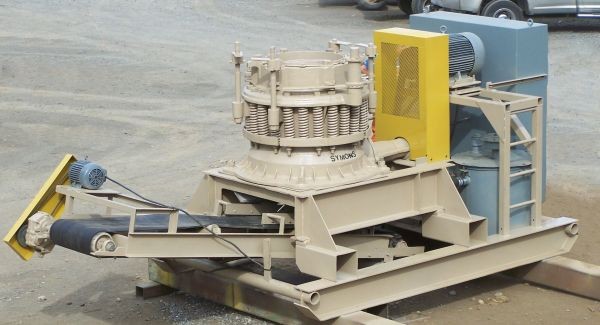
A cone crusher is similar in operation to a gyratory crusher, with less steepness in the crushing chamber and more of a parallel zone between crushing zones. As rock enters the top of the cone crusher, it becomes wedged and squeezed between the mantle and the bowl liner or concave. Large pieces of ore are broken once, and then fall to a lower position (because they are now smaller) where they are broken again. This process continues until the pieces are small enough to fall through the narrow opening at the bottom of the crusher.

Mobile Cone Crushing Plants:

A portable crushing plant allows you to transport your cone crusher from one area of you operation to another in a quick and cost efficient manner. Crushing plants make use of a large range of equipment, such as a pre-screener, loading conveyor, intake hopper, magnetic separator, crushing unit, such as jaw crushers and cone crusher etc. When we custom build your Crushing Plant it will be built to your specifications.

Features: A cone crusher breaks rock by squeezing the rock between an eccentrically gyrating spindle, which is covered by a wear resistant mantle, and the enclosing concave hopper, covered by a manganese concave or a bowl liner.

So whether you are looking to buy or sell cone crusher equipment. Our staff will help ensure that we find you the very best piece of equipment for the very best price.

News categories

Used Jaw Crusher

Savona Equipment has one of the largest selections of new and used Jaw Crusher equipment for sale. Utilizing over 100 years of experience ensures that we help you find the best mining equipment for your needs. Weather its new or used crushing equipment there isn’t a better choice than Savona equipment.

We scour the entire world searching for the absolute best crushing equipment. All of our crushers are designed to effectively reduce large rocks into smaller rocks, gravel, or rock dust. We search out the most dependable, and productive crushing equipment in the market.

Jaw Crushers:

A jaw crusher is crude piece of equipment that is used to crush all kinds of hard rocks and block material. Mainly jaw crushers are used in the following industries: minerals, quarry, building materials, road, rail way, water conservancy and hydropower.

Most jaw crushers are work as follows. The motor drives the belt wheel, and makes movable jaw up and down by eccentric shaft. When the jaw rises, the angle between the fixed jaw and movable jaw gets larger and the materials can be crushed. When the movable jaw is down, the angle between the fixed jaw and movable jaw becomes smaller. The movable jaw plate leaves the fixed jaw plate under the function of drawbar and spring, at which point the crushed materials are discharged from the lower outlet of the crushing cavity.

Features: It features a simple structure, large crushing ratio, high output, even particles, convenient maintenance and subsequently low production costs.

So whether you are looking to buy or sell jaw crusher equipment. Our staff will help ensure that we find you the very best piece of equipment for the very best price.

News categories

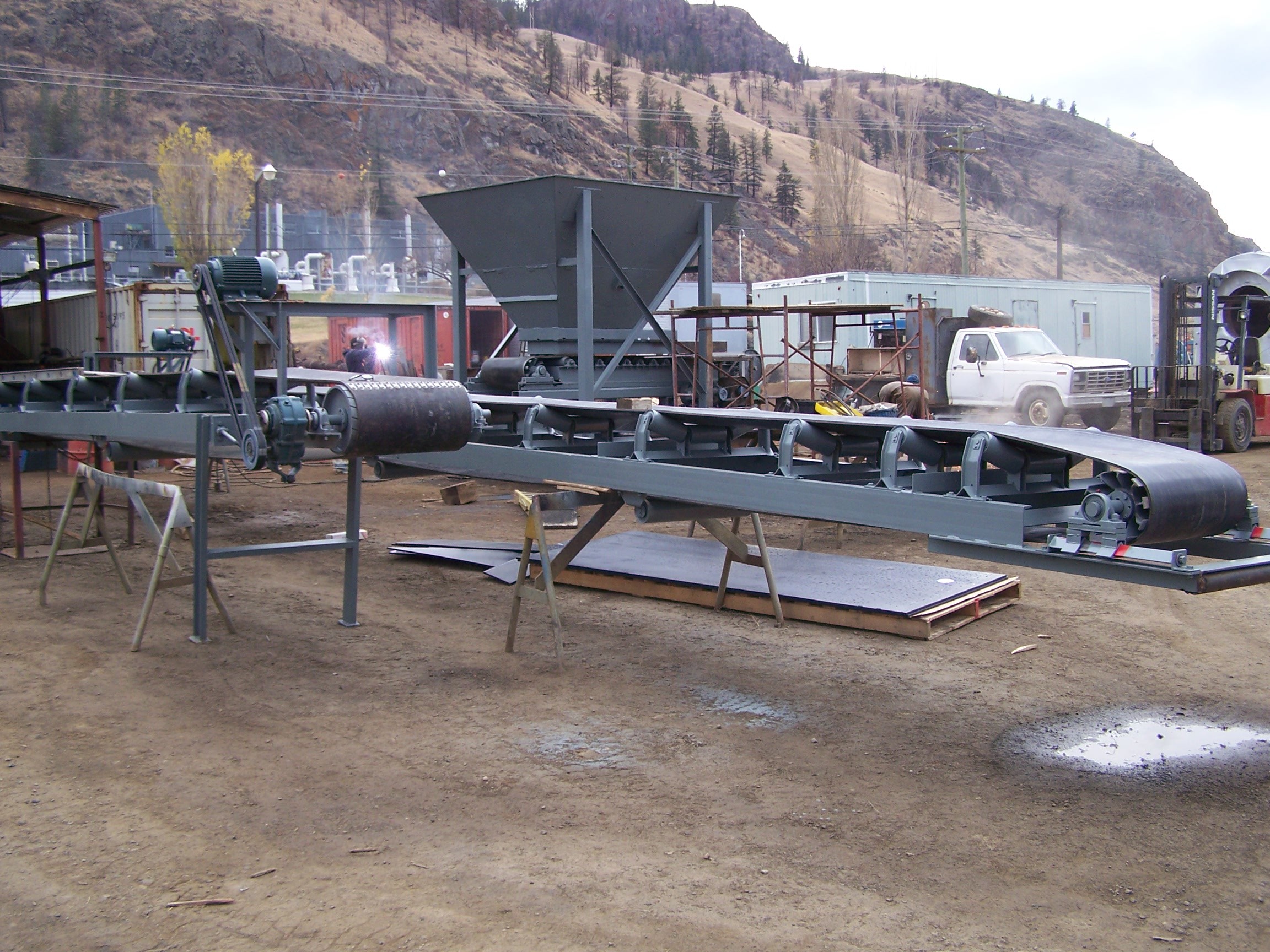
Used Conveyors

Savona Equipment has a wide selection of conveyor systems both new and used. Conveyor systems are commonly used across a range of industries due to the numerous benefits they provide.

  • Conveyors are able to safely transport materials from one level to another, which when done by human labor would be strenuous and expensive.
  • They can be installed almost anywhere, and are much safer than using a forklift or other machine to move materials.
  • They can move loads of all shapes, sizes and weights. Also, many have advanced safety features that help prevent accidents.
  • There are a variety of options available for running conveying systems, including the hydraulic, mechanical and fully automated systems, which are equipped to fit individual needs.

We search the globe to find the absolute best used conveyors available. We understand that a conveyor system is often the lifeline to a company’s ability to effectively move its products in a timely fashion. We take extra steps to ensure that all of our conveyors perform to their peak capacity, and that they are always inspected before being placed on our website.

We offer the following types of conveyors.


News categories

Used Ball Mills For Sale

Savona Equipment is the largest supplier of used ball mills and mining equipment in the North America. We have over 100 years of experience providing the mining industry with the best equipment both new and used. We apply this wealth of experience to locate, refurbish and re-sell the best grinders the mining industry has to offer.

Our Ball Mills are a key piece of equipment for grinding crushed materials, and it is often used in production lines for powders such as cements, silicates, refractory material, fertilizer, glass ceramics, etc. Typically there are two types of ball mills, grate type and overfall type and they are used depending on the different ways of discharging material. Determining the right type of media is going to depend a lot of what you are looking to grind. Key properties of grinding media are size, density, hardness, and composition.

Ball Mills in general offer several key advantages over other grinding systems. The cost of installation, power and media is very affordable. Combine that with the fact that you can continuously operate a ball mall for a wide range of material hardness. It’s one extremely versatile piece mining equipment.

We make the very best effort to search the globe to offer only the best Ball Mills, and grinding equipment. Our staff is extremely knowledgeable so whether you are looking to buy or sell your used ball mills, please don’t hesitate to give our staff a call as we can most certainly help.

News categories

Vibrating Screens for Aggregate Operations

Wash Plants Portable Plants Horizontal Vibrating Screens

Circular Vibrating Screens Inclined Vibrating Screens Rotary Vibrating Screens

When buying Aggregate Vibrating Screens of any type and brand needs to be of the high quality for aggregate screening operations. Our inventory includes Wash Plants, Portable Wash Plants, Horizontal, Circular, Inclined, and Rotary Screens. Aggregate Screens are used for screening and processing various materials including mineral, top soil, or sand and gravel. We specialize in reconditioning used screens and providing them fully ready for service. Wether you need to buy a 2 deck or 3 deck vibrating screens we can make sure you get right screening machine for the job. With so many options when it comes to aggregate screening and dewatering you need a company that can provide you with knowledgeable advice on exactly what you are looking for.

We sell new & used inclined screens for bulk materials processing, proving their exceptional reliability and high productivity in the toughest industrial environments. Our inventory includes hydropower, vibrating screens, and inclined screens for wastewater. Savona Equipment Inclined Screens are durable, dependable and affordable. 

Savona Equipment sells high quality wash plants for aggregate operations. We have several washing plants available to fit your needs. Our inventory includes wash plants for recycling water, complete with, feeder screens, sand screw, classifier, clarifier, etc. The washing of aggregates is required for many markets and applications. 

Savona Equipment sells new and used circular vibrating screens, also called circular-motion vibrating screens, that are used to classify medium to coarse-grained bulk materials for screening. Circular vibrating screens operate using indirect excitation of the screen mesh. The entire screen frame is driven by unbalance masses, which produce a circular vibrating motion. Screeners and Separators sift, classify, scalp, or dewater bulk solids and slurries.

Savona Equipment offers horizontal screens designed to increase efficiencies and provide higher levels of profitability. Screens are available with standard crowned decks or flat decks for modular urethane media. We offer screens that will provide you with horizontal screening efficiency. Quality vibrating screens maximize flow and coverage for increased production with minimal maintenance and downtime.

Savona Equipment supplies and sells portable screening equipment for lab screening or small production requirements as well as large aggregate screening operations. We sell portable vibrating screening plants, mobile screening plants, mobile vibratory topsoil screeners, and portable compost screens.

Savona Equipment sells rotary screens for solid-liquid separation, perfect for the pretreatment of wastewater, topsoil, sand, and gravel. We sell self-cleaning external cleaning scraper and internal pressurized wash water systems for thorough cleaning of the filter drum. 

News categories

Aggregate Equipment for Sale

Over the past twenty five years our company has custom built, refurbished, and sold hundreds of crushing and screening equipment and related products for aggregate operations in USA, Canada, Central and South America, and worldwide. Selling aggregate equipment is central to our business and over the years we have developed the capabilities to not only supply our customers with refurbished used aggregate equipment but custom build crushing and screening equipment to their requirement.

From custom building hoppers and feeders to skid mounting cone crushers with discharge conveyors we can build custom aggregate equipment for each specific site. Because we primarily deal in used equipment we can often keep the cost of customizing equipment much lower than if they were to buy new. Customers can get a complete turn-key aggregate circuit well staying within a reasonable cost.

Custom Built Aggregate Equipment

Over 25 years of building up inventory has given us an extensive inventory of repair and wear parts for sand screws, coarse material washers, log washers and classifying tanks. Of course if we do not have used parts available we will order new. If you need a new, used, or custom built conveyor, or need to repair a conveyor, chances are we can help. We supply head and tail pulleys, belt scales, pillow block bearings, and motors for conveyors on a daily basis.

Aggregate Crushing and Screening Plant

Savona Equipment staff has a combined experience of well over 100 years in the aggregate equipment industry and we work hard to insure our customers get the best service each time they come to us. If you are setting up a crushing and screening plant or just need a piece of equipment for you aggregate operation give us a call and we will be make sure you get the right equipment every time.

News categories
Subscribe to Equipment