
Imported from legacy ID 68964

Why Mines Buy Used Equipment


Why Mines Buy Used Equipment

With millions of dollars invested into developing a successful mining operation, mine operators must be careful where they invest their money? When we sat down on The Crownsmen Podcast they wanted to understand why customers often choose used over new equipment. Jordan Downey, our International Sales Manager, discussed the benefits of used equipment and where Savona Equipment comes into play. There are four main reasons why someone will buy used over new equipment.

Reason 1: Used mining equipment and processing equipment often costs less than new.
Mining & Milling equipment is built heavy duty and often designed to withstand some of the harshest conditions. It is also very expensive to manufacture. Once it has been manufactured and put into commission it can last for years and years. If a mine shuts down, often the equipment is still functional and only needs to be refurbished before it can be used at another operation. The cost of removing, reconditioning, and shipping mining and milling equipment is often far less than purchasing brand new equipment that will possibly not outperform the used. Equipment such as conveyor systems or hoppers & feeders might only need rollers, electric motors, and guards replaced while an LHD Vehicle or underground rock truck may simply require new tires or a new engine or even just a general reconditioning.

Reason 2: Lead Times for Used Equipment is often less than ordering newly manufactured equipment.
Manufacturing Ball Mills or Cone Crushers is not like a car assembly line. Designing, engineering, casting, and assembly is highly technical and costly. It can take weeks or even months to produce a single machine and often a manufacturer has back orders and a mine operator simply cannot afford to wait, so used equipment becomes a perfect option. With entire Complete Recovery Plants for sale, a mine operator can get a fully engineered plant delivered in a fraction of the time it would take to manufacture all new equipment.  This can also be extremely important if equipment breaks suddenly and the mine needs a quick replacement.

Reason 3: If an existing Ore Processing Plant or Mining Operation needs a specific make or model that is no longer manufactured, used is a great option.
Because mining equipment can have such a long life, often a manufacturer will stop manufacturing the products or will get bought out while the equipment is still fully operational. In these cases finding a new piece of equipment that integrates into the mine’s current operation can be challenging or even impossible. Used equipment can often be easily swapped into an existing mining operation.

Reason 4: Used equipment can be bought to replace parts in existing mining equipment.
If a mine is fully operational and one part of one piece of equipment breaks the entire mine can shut down. Examples of this are electrical equipment when one section of a Motor Control Center (MCC) needs to be replaced or one cell of a flotation machine, the parts from used equipment can quickly be replaced or used as backup without having to invest in new replacement parts or replacing the entire units.

Used equipment is a way to save costs and operate more efficiently around the world. Companies like Savona Equipment provide a unique option for projects in the exploration stages that need a refurbished diamond drill or a mobile trommel wash plant, or for a small mine that is about start operations and needs fully functional equipment quickly, or even a full scale mining operation that can’t afford downtime. Some projects specifically require new equipment but more and more used is becoming the better option for the mine operators and for investors.

Have equipment you want to buy or sell? Contact Us
News categories

Buying & Selling Mining Equipment & Ore Processing Plants Worldwide


Mining & Processing Equipment

Jordan Downey sat down for an interview on The Crownsmen Podcast to discuss not only what we offer as a company but why many customers choose to buy used mining equipment. During the interview we also had an opportunity to layout some of our new product lines and recently aquired ore processing and recovery plants

For over 30 years Savona Equipment has been supplying equipment worldwide and over the years has done everything from rebuilding crushers, customizing conveyor systems, engineering feeders and hoppers, to distributing surplus electrical equipment. However in more recent years we have seen an increased demand for us to offer new placer mining equipment and have launched the ST Trommel Wash Plant line and taken on Hy-G Concentrators, giving our alluvial mining customers both premium new and used options.

Over the years Savona Equipment has offered various grinding mills, pilot plants, and crushing plants. More recently we began adding larger scale plants including a 6500 TPD Gold and Silver Ore Processing and Recovery Plant further widening our customer base and the value offered from Savona Equipment. 


News categories

Savona Equipment Handling Sale of Marlin Mine Plant

Savona Equipment Ltd is excited to share that we are handling the sale of the Marlin Mine Gold and Silver Plant in Guatemala. The sale of this the 6,500 tonnes per day plant in great condition is a remarkable opportunity for this high-quality mining equipment and plant to go out to a global market.

To read the full story about this sale and learn more about the plant's features, you can read the article on Mining.com:

Mining.com: Marlin Mine Gold & Silver Plant Sale - Savona Equipment Ltd.

Savona Equipment remains the trusted partner for connecting buyers and sellers of mining equipment worldwide.

News categories

Mineral Jig Concentrators for Ore Processing & Separation, How Jigs use Gravity Separation


What is a mineral jig?

Mineral jigs are a type of mining equipment, also referred to as gravity concentrators or jig concentrators, that are used in operations to separate different ore materials based on their densities. Usually they will process material that is a similar size after the ore has passed through a crusher or over a screening plant. Although there are many variants that will take place in a mineral jig, certain principles remain constant. Material is first fed into the jig bed, usually made with a screen, then propulsing columns thrust water upward which suspend particles in the water because they have been exposed to gravitational energy. Frequencies normally range in between 125-350 strokes/minute. In between the pulses material that is heavier will be trapped in the bed filled with steel shot (small round steel media) and settle in the bottom of the jig and the concentration is removed separately for further processing with an example being over a gold concentrating table or if the grade is high enough in a smelting furnace. If a jig concentrator is being used for minerals that are lower in density, coal being one, the gravitational energy has a reverse effect because material around coal is heavier and the coal will float towards the top.        


What companies manufacture mineral jigs?

There have been many different companies who have manufactured their own version of a mineral jig. Madden Steel Inc. (MSI Mining) produces the 4Plex Gold Roughing Jig and Duplex Jig.


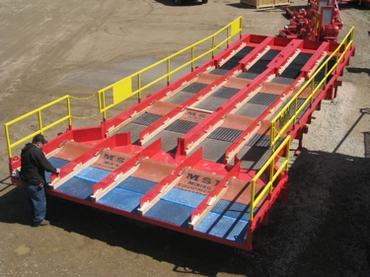
The 4Plex gold jig uses a roughing 50 inch 4plex jig and twin 36 inch cleaning jigs underneath with gold recovery rates of up to 98 percent. Their 50 inch Duplex jig is able to recover gold down to 400 mesh (37 micron) while processing 56 tons per hour. Savona Equipment regularly has used MSI mineral jigs for sale and will provide necessary modifications and reconditioning before the jig goes out into the field.


Mineral Technologies produces the Kelsey Centrifugal Jig. This circular jig has been engineered when a miner needs extremely fine concentrate grades and mineral recovery. The process combines conventional gravity separation and centrifugal force allowing for size recovery down to 10 microns.  


Sepro builds selective mineral jigs ranging in capacity from 5-400 tons per hour. They supply in Simplex Models (single unit) or the Duplex Models (2 jigs in series). Their units are made to process material that has a minimum difference in specific gravity units of 1.0.


Some other past producers of jigs for ore processing included Pro-Pulse and Gardner Denver.


What type of mining operations are mineral jigs used for?

Mineral jigs in mining are known as one of the most complex areas in mineral processing because of the continuously changing hydrodynamics. Jigs are used to separate materials in alluvial deposits to anthracites. If a jig is used in hard rock mining the material will need to be crushed before the recovery of diamonds, gemstones, gold, and coal is able to take place. They are also common in platinum, tin, tungsten, and sapphire operations and other lower density mineral mines. Iron, manganese and other base metal mines are also able to use mineral jigs in their processes.    


Are there different machines connected to a mineral jig?

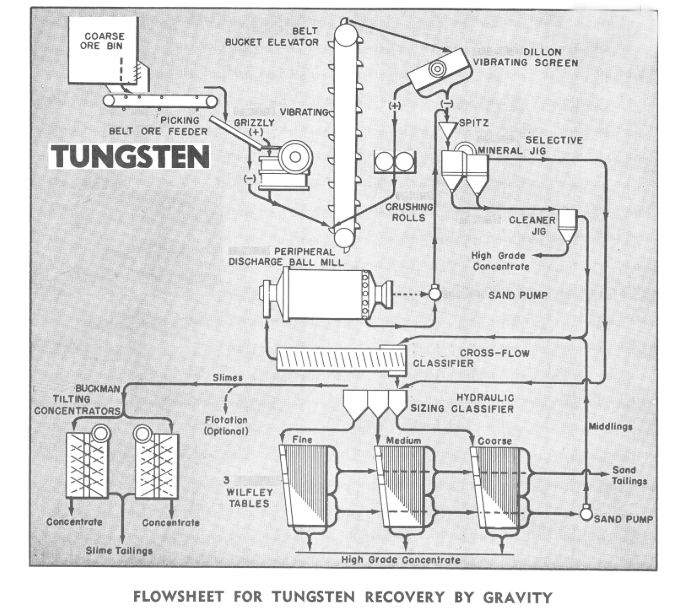
Electric motors would be the common machine directly connected to the jig providing the power, and some units may also include an electric starter. Using a scenario where mineral jigs are in a tungsten recovery process there are many different equipment items before and after the jigging takes place. Material will be transported to a roll crusher after initial screening and crushing. The ore will be fed into a vibrating screen to sort, with oversize being fed into a ball mill for additional processing and the specific sized material sent into the mineral jig. The concentrate produced in the first jig will be processed by an additional cleaner jig which produces the first batch of high-grade concentrate. Material that needs additional processing from both jigs will be sent to a classifier and then to concentrating table circuit producing a second batch of high grade concentrate. Common with most mine operations, mineral jigs are one part of the extensive ore extraction process.

How do mineral jigs range in size and capacity?

A mineral jigs size and capacity range will depend on the operation. If one is being used for a small placer mine, capacity may be 5 tons per hour. Using 2 tons/hour per square foot of jig bed is a good rule of thumb.


In large scale mines a single duplex mineral jig will process up to 450 TPH and this will be scaled up by adding more units to reach capacity required. Capacities are always estimated based on closed grinding circuit with re-circulating load.


Capacity will range depending on the mineral being liberated. The size range which gravity concentration is able to be applied is up to 1 metre (3.2 ft.), but the ideal largest size to process is around 500mm (19.7 in.). On the small spectrum material that is around micrometres is the cutoff for reasonable processing results.


If you have any questions, please feel free to contact us.

News categories

Centrifugal Pumps for Mining, Their Purpose, Top Brands & Fluid Handling Capabilities

What is a centrifugal pump?

Centrifugal pumps are used in applications that need to transport fluid. This is done by the conversion of rotational kinetic energy to the hydrodynamic energy. The rotational energy moves fluid from point A to B either at a relatively even grade or by pumping the fluid or slurry vertically. Common types of these pumps would be vertical tank pumps, froth pumps, trash pumps, slurry pumps, and multistage centrifugal pumps.


What are the main brands of centrifugal pumps?

In 2016 according to research done by Persistence, centrifugal pumps had a market share of over 90 percent. Positive displacement pumps are in a distant second accounting for less than 9 percent of the market. Major players in the centrifugal pump manufacturing market are KSB AG, Flowserve Corporation, Sulzer AG, Ebara Corporation, Grundfos, The Weir Group Plc, WILO SE, Xylem Inc., Ruhrpumpen Group, and Kirloskar Brothers Ltd. These leading companies were part of the $34.39 billion USD estimated pump deployment market in 2016.      


What do the main brands specialize in?

KSB specializes in long-life pumps made under their GIW Industries brand. If needed at copper mines in Chile or tar sands in Canada they will manufacture pumps that stand up to whatever corrosive materials a mine has to be able to process.  

If you recognize the names such as Flygt, Godwin, Bell & Gossett, or Goulds pumps these are all now manufactured under Xylem’s brand. Flygt Submersible pumps are renowned and handle jobs from small drainage to large dewatering applications. Godwin offers automatic self-priming pumps that are run by diesel and electric power. Used in many different industries worldwide including mining and construction Godwin pumps excel in dewatering and liquid transfers.

The Weir Group sells pumps in over 15 different categories including mine dewatering pumps, vertical slurry pumps, and high-pressure pumps. In the Centrifugal pump category brands include Warman, Floway, Lewis, and Gabbioneta that have a capacity for pumping solids >270mm.     


What types of fluid do centrifugal pumps move?

There are many different liquids that centrifugal pumps process and they have the highest flow rates when pumping water and relatively thin liquids. If thicker oil needs to be moved a different pump should be selected. If your mining application includes separating bitumen and minerals from clay and sand then centrifugal pumps are the right choice of product. Centrifugal pumps are also used for applications in the chemical, paint, petrochemical, pharmaceutical, cellulose, and hydrocarbon sectors.     


What machines are centrifugal pumps connected to at a mine?

Aside from power sources, centrifugal pumps will normally be connected to hose or pipe for fluid transfers. Here is an example of how much pumps are relied upon in a mine process circuit:

  1. A ball mill will crush ore into a slurry which is then fed into a centrifugal pump
  2. The pump feeds ore into a classifier and conditioning tank.
  3. Two more pumps will send slurry from the conditioning tank into either the sampling area or the flotation system.
  4. Once the flotation system is finished two more pumps will send material into either a tailings thickener or concentrate thickener.
  5. From the thickener, another pump will send material to the tailings pond, a second to the mine dewatering system for further processing, and a third into the plate filtration/dewatering process before being pumped into a secondary filtration process before the final product is sent to the smelter.
  6. Material that went into the concentrate thickener will be pumped into the secondary filtration process and also sent to the smelting room.

Without having the pumps in between all the different equipment you would have to set up the process equipment to all run downhill and reprocessing material would pose a much harder challenge.


What range of fluid (capacity) do centrifugal pumps process?

The range of flow rate for centrifugal pump depends on a number of variables and will pump at 5-200,000 gallons per minute (19-757,080 lpm). A density of a liquid, particulate size in slurries, and total head needed are all common factors. If you only need 10 ft. total head (3m) then the flow rate will be much higher than if 7,500 ft. total head (2,286m) is needed.  


What powers a centrifugal pump

Depending on all the application factors centrifugal pumps need anywhere from 0.125 to 5,000 hp. This requirement will usually be generated through an electric motor or diesel engine depending on the application. In remote locations such as a placer mine site where electricity is unavailable a diesel engine to power, your pumps will be adequate. In large mine processing plants that run 24 hours a day 365 days a year, electric power would be needed to allow for less maintenance and uninterrupted production.

VIEW FULL Centrifugal pumps INVENTORY


If you are interested, have any questions, or you would like to get more information on any of the following information provided for Centrifugal Pumps, please contact

News categories

How Centrifugal Concentrators Changed What It Means To Recover Fine Gold

Gold centrifugal concentrators have been developed over the past century and allow for mining operations to trap a higher percentage of the fine gold and other precious metals in black sands that used to disappear into tailing ponds. Along with the higher yields, operations are now able to run for extended periods of time because of the advancement in automation equipment allowing for run times of 8 hours up to 24 hour cycles. There has also been larger concentrator bowls developed increasing production capacity to thousands of tons per day. These advances have made significant impacts in many areas that are being mined in Northern Canada and Alaska that have short seasons because of permafrost and short snowless periods. In areas with high gold recovery rates the black sands produced are able to be directly processed over a gold separation table.      


The Centrifugal Concentrators History

There have been three standouts for centrifugal gold concentrators since the 1900’s. What is known today as the Falcon Concentrator has been developed over time from the smooth walled Falcon “B-Bowl and MacNicol bowl that originated in Australia. While the technology was available under patent since the 1930’s, for the most part no commercialization took place until the patent expired in 1982.

In the 1960’s Byron Knelson settled down in British Columbia, and while running his excavating company he watched as alluvial gold miners in the Yukon Territory used sluice boxes to recover course gold while most of the fine gold would end up in tailings ponds. This set him on a course to invent the Knelson Concentrator that would go on to change how placer mining operations are designed worldwide.

The Hy-G Concentrator was another centrifugal concentrator that was developed soon after the original patent from Australia had expired. The late Don Brember tested and refined the centrifugal concentrator technology and wanted to develop a machine that would run continually  for up to 24 hours with high recovery rates before cleanout was needed in turn increasing the miner’s gold yield.


Technology Inside

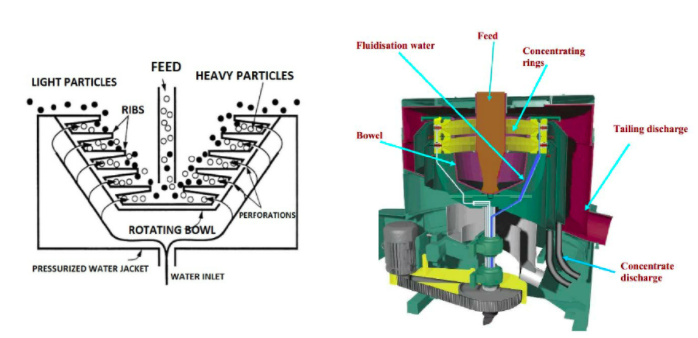
Centrifugal gold concentrators operate using G-forces which allow for separation of the heavier particulate including fine gold and other metals. When material is introduced to the bowl from 50 up to 600 G’s the gravitational field allows for recovery of fines that are 3 microns small. The main feature of the concentrator is the bowl itself that has been designed over the years for increased recovery rates. Specially designed ribs inside the cone trap heavy particles which are then discharged through the concentrate discharge, while all the lighter material is discharged through the tailings discharge. Inside the bowl there are fluidization holes for water feed at the start of the process. In the middle of the cone a stationary feed tube introduces the slurry material at the bottom of the cone which is then forced upward and outward. In a Knelson Concentrator the entire process “concentration cycle” will be completed in about one minute after each rib in the cone is filled with heavier concentrate. Large bowls with surface areas up to 3.37 m2 process the highest quantities of materials. Now with the latest innovations in gold concentrators the process of feeding, discharging the concentrates and tailings, and re-starting the feed again can all be automated.


Optimized Operations

Based on size and application the concentrator will be used in, different material feed and discharge options are used. In flow sheets provided by Knelson Concentrators they give the examples of a “Conventional Grinding Circuit” or the “Extreme Gravity Circuit”.

In the conventional circuit a Semi-Continuous Concentrator is fed by material after it is processed through a screen and the concentrate material is discharged into either a Acacia Reactor or Gold Concentrating Table. 

Using an Extreme Gravity Circuit one Semi-Continuous concentrator and one Variable Discharge Concentrator would be used. First both would be fed through a cyclone with the concentrate discharged from the Semi-Continuous unit going into the gold room for further processing. Material processed through the Variable Discharge unit would be then sent into a thickener or the concentrate gathered for further treatment.   

Following are examples of the wide range in size from the top Centrifugal Concentrator manufacturers in the world.


Where Are they Now?

In 2008 Falcon Concentrators purchased Sepro Mineral Processing International and shortly after rebranded under the name Sepro Mineral Systems. The Falcon Concentrators are still sold under their original name.

Knelson Concentrators are also sold under the original name and after the passing of Byron Knelson, the founder, FLSmidth purchased the company in 2011 and continues on his legacy.

Hy-G Concentrators are now manufactured and distributed exclusively through Savona Equipment Ltd. These units are ever popular with placer miners due to the design that collects high grade concentrates.  


VIEW FULL GOLD CONCENTRAtors INVENTORY


If you are interested, have any questions, or you would like to get more information on any of the following information provided for Gold Concentrating & Refining Equipment, please contact


News categories

The Basics of How Ore Processing and Recovery Plants Work

The Basics of How Ore Processing and Recovery Plants Work


The term processing and recovery plant is broad to say the least so we are going to give some basic examples of the types of ore processing plants. It is important to understand that each full scale ore processing plant, backfill plant, placer mining plant, or even a small scale test plant is specifically engineered for the material it will be processing. The type of plant at any given mine or recovery operation also depends on permits, available road access, amount of precious materials to be mined, and of course cost. In this article we will be focusing on ore processing plants.


What kind of material are you processing?

Technically all ore processing falls under the field of extractive metallurgy, mineral engineering, and mineral processing also known as mineral dressing or ore dresing. It is the process of separating commercially valuable minerals from their ores. Commonly, haul trucks transport the ore from open pits or underground operations to processing operations. Ore may be stockpiled for later processing. The grade and type of ore determines the mineral processing method used. Additionally, the geochemical makeup of the ore, including its hardness, sulfur content, carbon content, and other minerals found within, impact the cost and methods used to extract gold, silver, and other precious metals and minerals.


What can you recover?

Ore processing recovery systems are used for everything from recovering precious metals, industrial minerals, and rare earth minerals. Plants for recovering precious metals often recover multiple metals or minerals in the same operation. This is because often where there is gold the ore will contain copper and silver. When talking about the recovery of precious metals we are identifying the noble metals like gold, silver, platinum, and palladium. Other primary metals that ore processing plants are used to recover includes copper and iron ore. There are rare metallic minerals such as nickel, cobalt, and scandium which are mined using similar processes. There is also the processing of rare earth minerals.


How much material will an ore processing plant process per day?

Ore & Mineral Processing Plants are designed for various purposes and capacity, for large primary ore processing, secondary, and tertiary fine material concentrating as well as complete aggregate, recycling, mining, and treatment facilities. They are mostly measured by TPD (tons per day). Based on the capacity of the plant and the grade of the ore it is processing, engineers and mining geologists can determine the economic viability of the mine.  The investment made in a gold processing plants, silver processing plants, as well as plants for recovery of other precious metals and rare earth minerals is impacted by the cost and methods used to extract gold, silver, and other precious metals and minerals. It is also impacted by the market price and market projections of the material being mined. A 6500 TPD Gold & Silver Processing Plant will cost millions of dollars where small mineral pilot plants may cost hundred of thousands and a portable pilot plant may cost only thousands. Many full scale operations begin with a test plant before upgrading to a full production ore processing plant.


What equipment is included in an Ore Processing Plant?

Each plant is different but there are several common pieces of equipment you will almost always find through 5 stages of processing. The first is size reduction meant to break up the largest of material which includes crushers, industrial screens, and large hoppers and feeders. The second process is the gravity circuit which further breaks down the material for further processing and includes grinding mills, cyclones, and depending on the process gravity concentrators. The third is the leaching process that uses equipment with industrial grade agitators and mixers and contains a leaching solution and allows the valuable material to leach from the ore into solution. The fourth stage is the actual recovery of the material being processed which greatly depends on the material itself and the ore it is mixed with. For gold it could be a refining and smelting system, bullion furnace, or concentrating tables. The fifth stage is the tailings treatment. Tailings are the byproducts left over from mining and extracting resources, such as extracting bitumen from the oilsands or minerals such as copper or gold from ores. Tailings include: Finely ground rock particles – ranging from sand-sized to silt-sized. Chemicals used to extract the valuable mineral or oil. The treatment is meant to process the tailings remove the sediments and chemicals and then often reuse the water for going back into the processing plant. Mixed in with the entire process are various types of industrial pumps, belt conveyors, electrical equipment including large generators, and heavy equipment.


How can you purchase an Ore Processing Plant?

There are many ways to purchase a plant. Large scale mines will often engineers and new plant. In some case publicly traded companies require new processing equipment for the main components of the plants. A second common option is to buy a used plant that has already been in service. This can often greatly reduce the cost while still getting a plant that is engineered as well as proven to operate efficiently. It also minimizes the lead times of waiting for new equipment to be manufactured. The third option is to buy each piece of mining and milling equipment individually and mix new and used equipment. This can lead to even a further reduction in your cost but can be a challenge to find each piece of equipment that will fit your specifications.

This article is a brief overview of an ore processing and recovery plant. The first step is to speak with a reputable professional in the industries including mine engineers, mining geologists, and equipment experts. Once you have the right team in place it will be much easier to find the right equipment and purchase the plant which produces the highest profits.


FULL PLANT  INVENTORY


Still not sure which ore processing equipment to buy? Contact us with your requirement.

News categories

Industrial Conveyor Systems for Transporting Bulk Materials


Types of Industrial Conveyor Systems for Transporting Bulk Materials

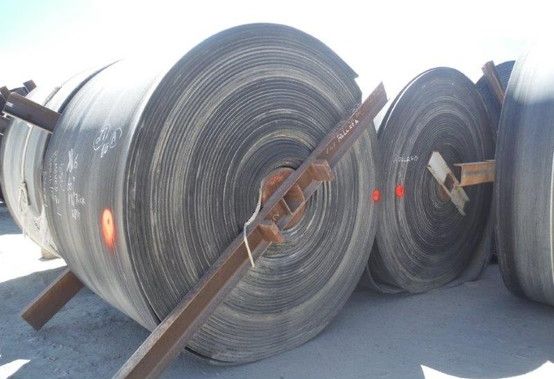
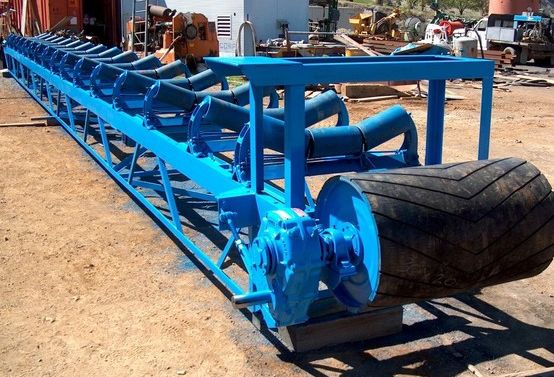
If you visit almost any mine or rock quarry in the world you will likely find a conveyor system integrated into the operation. Some are simple and used to transport material 50 meters from the crushers to a loading area, others are complex systems that carry various material with a wide range of densities through the entire process. Conveyors are engineered and designed to withstand different types of materials, environments, and even running time (some run several times per day, others 24 hours). In almost all industrial operations conveyors are made of industrial grade belting, steel trusses and angle iron, magnetic pulleys, idlers, and are powered by large electric motors and manufactured for the client's specific needs.


Conveyor Belting

The belt on the conveyor determines how wide the material can be or the maximum width of fine material able to be transported. The length of the conveyor not only determines how far the material will be transported but the types of pulleys, idlers, and steel that will be required. Distance also has a direct effect on the size of motor that will be required to keep the belt moving as it fills with the material.


Conveyors for Lighter Material

If a conveyor is carrying lighter materials buyers will often purchase a channel conveyor which has a simpler design, uses less steel but if used for the right purpose can still last for years. Conveyors built with channel have less support than other designs so they are also generally used for transporting over short distances and on flat surfaces.


Conveyors for Heavy material and longer distances.

When a channel conveyor doesn’t cut it the next most common type is a truss conveyor. They are designed and manufactured to carry large and dense materials over a longer distance and for are also common for transporting material up to a higher level. The crossing steel channel frame provides extra support and stability that keep the conveyor from not only bending but also twisting and damaging idlers, belting, or pulleys that would result in hours of downtime and could cost thousands or even millions of dollars.


Incline and Portable Conveyors System

The correct term for a portable conveyor is a Radial Stacking Conveyors and they can be used in a wide variety of applications from gravel pits to sawmills. Some can be hooked to a truck or machine and pulled from one location to another, others have wheels aligned to swivel in a circular pattern. Some portable stacking conveyor designs even allow you to fold the conveyor to allow easier and safer transportation of the unit. But they all share the same principle, to allow the material to be deposited into multiple locations using the same conveyor. Portable conveyors are almost always used to transport material on an incline to their destination. Often these conveyors use specially designed belting that has a cleated, rough top, diamond top, or extruded pattern to avoid material rollback or slippage.


Conveying Material Over Long Distances

Trucks and trains are expensive and often inconsistent. Overland Conveyor Systems are often the most efficient and cost-effective method of transporting large amounts of material over long distances. They can stretch miles and depend on the material are open or encased to keep material contained. The design of an overland conveyor is completely dependant on what is being transported. In different industrial sectors, you will see simple designs for light material and large heavy-duty truss designs to handle large, bulky, and dense materials.


Conveyors for Liquid and Granular Material

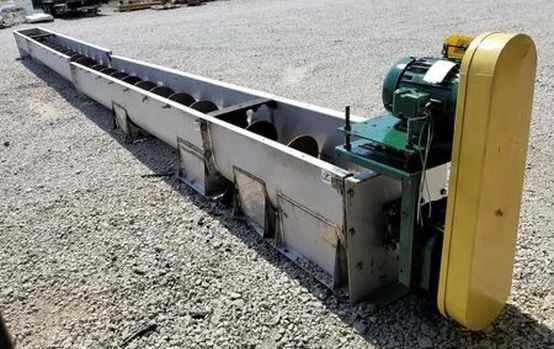
In many processing plants, the liquid is either added or is naturally mixed with the raw material making a standard belt conveyor useless for transporting even over short distances. Screw conveyors were designed as the solution to these applications. Auger conveyors or transfer augers move liquid or granular materials in various bulk handling industries from water treatment, to mines, and agriculture. However, auger conveyors also move semi-solid materials that are dry but difficult to manage on an open conveyor belt. Different uses will range from wood chip plants to food processors. Operating with auger conveying systems allow for better control of the material.


The Future of Conveyors

Like any technology conveyors, systems continue their advancement. Electronic monitoring of material and the conveyor itself is becoming more common and can save companies huge amounts of capital by decreasing downtime and serious damage to the conveyor. Overland conveyor systems will safely transport material for miles to shipping ports and complex ore processing plants run 24 hours per day using a combination of modern and tried and tested conveying methods. Watching a conveyor run from the distance may seem simple but the closer you get the more you realize it is an intricate machine essential to the operations it works in.


Full Conveyor Inventory


Still not sure which conveyors to buy? Contact us with your requirement.


News categories

The Basics of Placer Mining Equipment for Mining Gold and Other Precious Metals

The Basics of Placer Mining Equipment


If you have ever watched hit tv shows like Gold Rush on Discovery or History’s Yukon Gold you have seen placer mining equipment at work. The equipment used in both the tv shows and in many other mining operations is a mixture of simple and complex mining technology. We have broken down the main types of equipment used for mining alluvial deposits. While there are a variety of equipment used in placer mining operations such as water pumps, generators, pipe, and excavators there are several types of equipment that are specific for recover freegold and other precious metals. Placer Mining Equipment includes gold wash plants, derockers, sluice boxes, and trommels.


The kind of mining that can be done with placer mining Equipment can be through open-pit mining (which is also called open-cast mining), or through various surface excavating equipment such as………... or tunnelling equipment including……….. Gems and heavy metals (such as gold) are considerably much more dense than sand, and they tend to accumulate at the base of placer deposits.


Placer mining equipment offers you products that are durable, and work efficiently in this kind of environment and gives you best equipment to recover gold, gems, and any other precious metals from any other of your placer mining operations. Below is more detailed information and descriptions of placer mining equipment.


Equipment:

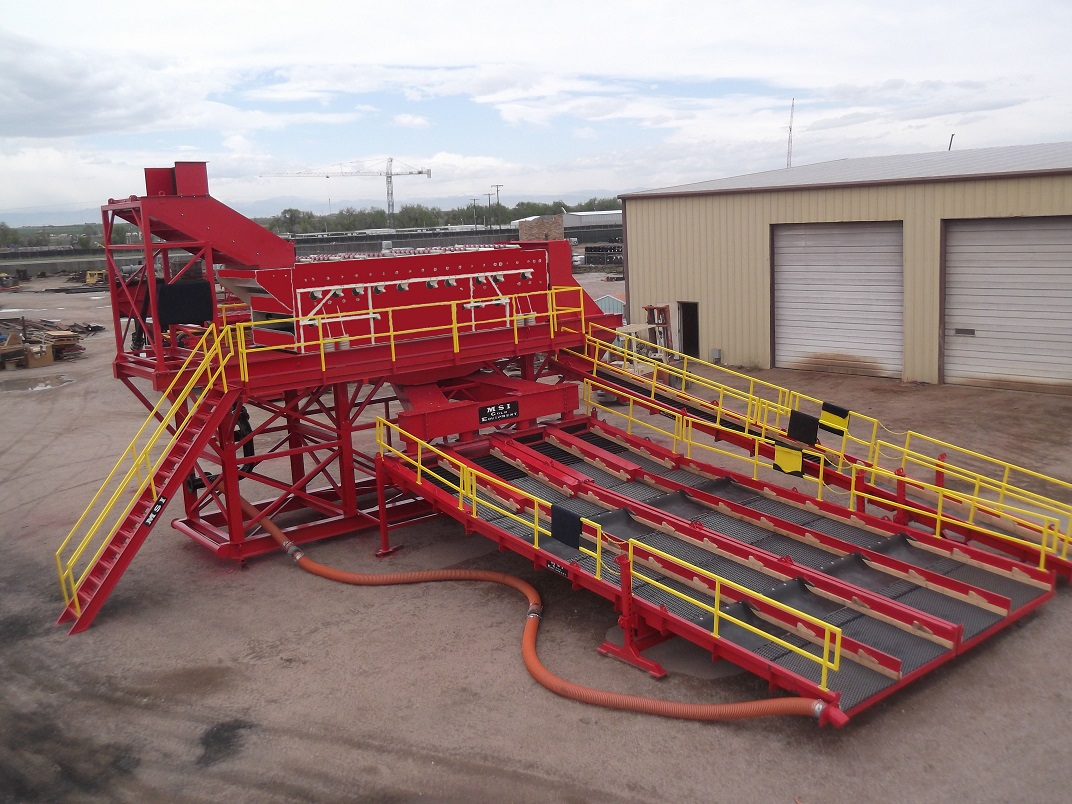
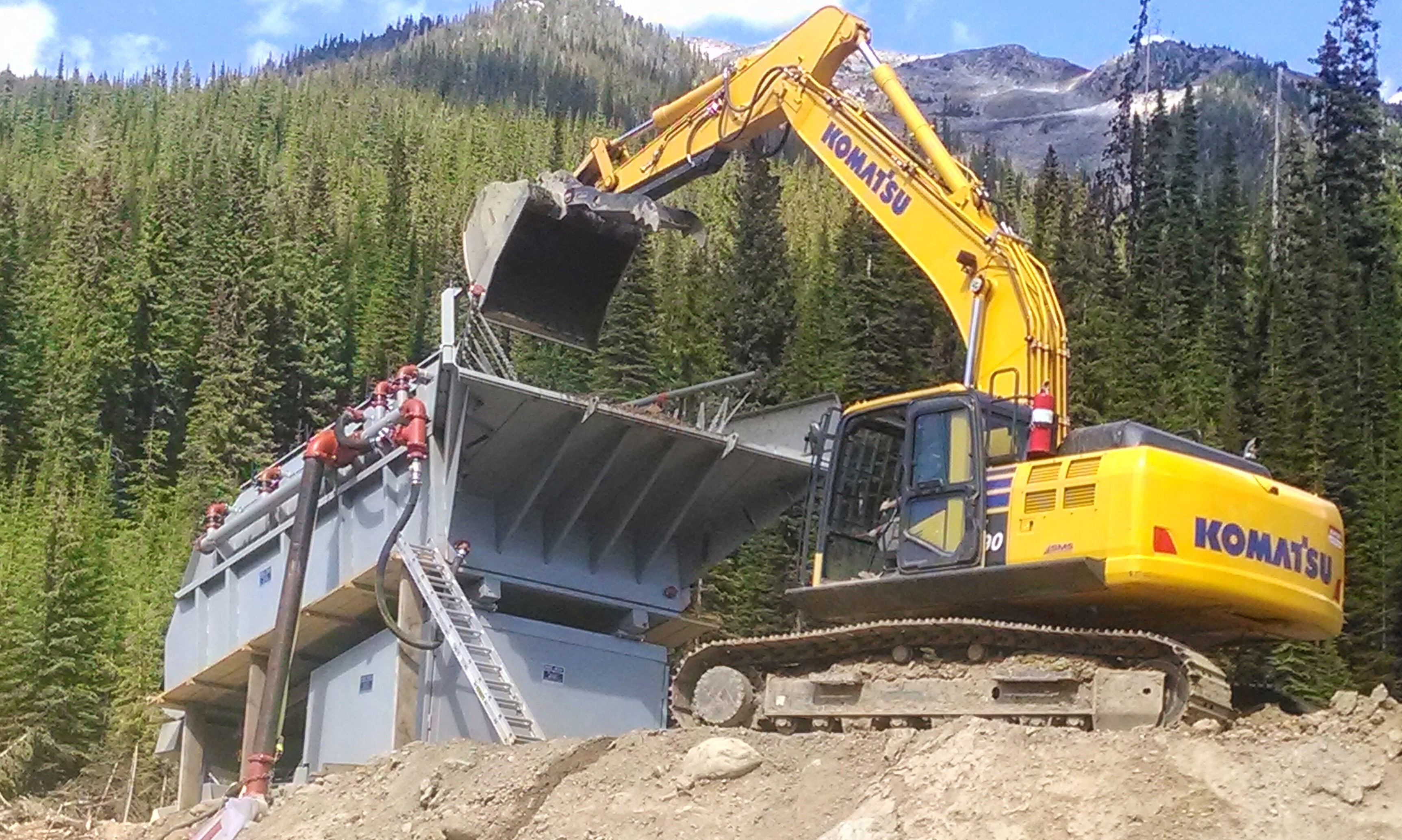
  • Gold Wash PlantsGold wash plants are offered in a variety of different options, for whatever your mining needs, including full production gold trommels, gold placer plants, and mining wash plants, which are all for gold mining. They also include testing plants which are often portable trommel wash plants which include top brands, such as MSI Wash Plants. You are also able to have the choice between Diesels or Gas Powered Gold Trommel Wash Plants, to fit whatever your needs are.


View Gold Wash Plants in Use


(Vibratory Gold Wash Plants; courtesy of MSI Wash Plants)

  • DerockersDerockers are ideal for alluvial mining of gold and other precious metals in areas that have large boulders. Derockers, such as the RMS-Ross Derocker, delivers a -2" product to downstream recovery, and it discharges clean washed +2" rock and boulder separately. To optimize your placer mining operations your derockers should be a unit that is automatic, self cleaning, and efficient.


(RMS-Ross Derocker loaded for transport; courtesy of RMS-Ross Derocker)

  • Sluice BoxesPlacer mining operations, sluice boxes, are for recovering of gold, other precious metals, and stones. Sluice boxes are specifically used in gold mining paydirt and sluicing creek beds to recover gold. Gold dredge sluice boxes can also be supplied in various sizes upon request and depend on how much material you need to process.


View Sluice Boxes in Use


(RMS-Ross R9-9 Sluice Box; courtesy of RMS-Ross Derocker)

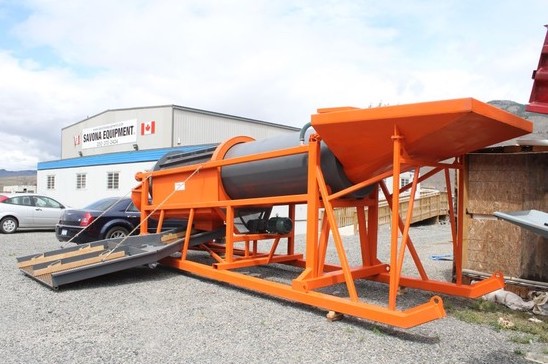
  • TrommelsTrommels are used for recovering gold and other precious metals from placer mining operations. Sizes vary but common sizes are  18 inch, 30 inch, 48 inch, 60 inch, & 7 foot Trommels. Many miners buy new but it is becoming more and more common for buyers to purchase used mining equipment including, trommel with refurbished parts that will be fully repaired or replaced as required/if necessary. Companies like Savona Equipment sell both the new and used Trommels and Gold Recovery Equipment worldwide including Portable Gold Trommels, Mini Wash Plants, and Gold Trommel Wash Plant from top trommel manufacturers such as Telsmith, McCloskey, Northern Placer, Aureco, Extrac-Tec. As well as selling top brands you can order a custom made gold recovery wash plant, that are designed, manufactured, and distributed by Savona Equipment. 


View Trommels in Use 


(Savona Equipment ST70 Trommel; courtesy of Savona Equipment)


If you are interested, have any questions, or you would like to get more information on any of the following information provided for Placer Mining Equipment, please contact


News categories

Feeders - Types & Applications | Best Feeder For Your Application


Feeder:  Requirement and Purpose

Generally, in the Mining process, ore arrives intermittently and requires a consistent flow for further processing in the production line. Retrieving ore from primary storage requires feeders otherwise ore will not flow evenly through any kind of gate mechanism. Surge bins are required at different points in the process chain as they serve as convenient holding arrangement to receive all the intermittent feed and to act as temporary storage units.


More about Surge Bins

In simple words, a surge bin can be described as a large bin above the crusher into which the ore is dumped prior to being discharged into the primary crusher. A feeder at the bottom of the surge bin helps transfer the ore to the crusher. These are essentially bulk storage containers that provide additional material storage space or are integrated into a material conveying system. Carbon steel is the is the most common material used for building these bins.  Bolt-Together, expandable units are available in many sizes which can save on freight and can be enlarged after installation.

Key features to be considered are - Sight glasses that can help in a viewing of contents; Sizing should be based on storage space requirement within the bin (consider the angle of repose) and the Exterior finish – which should ideally be painted and sand-blasted.

There are numerous types of feeders available for different applications and feeders are used in many different industries; ranging from mining to pharmaceuticals, to agriculture. Feeders are Used in conjunction with various other types of material handling equipment, feeders will be commonly found with equipment like crushers, dryers, grinders, conveyors, blenders, and mixers.


Working off a Feeder

An effective feeding process is in which the distance traveled is short and in which close regulation of the rate of passage is done. A feeder typically would consist of a small bin (which may be an integral part of a large bin), with a gate and a conveyor. The feeding mechanism regulates the passage of ore through the bin.

Further, feeders can be broadly classified as either volumetric or gravimetric:

  • Volumetric Feeder is meant to help with precise outputs. In a volumetric feeder, the material is first fed into a hopper. In the next stage, vibrations help the material to form a consistent density. Further, the material is leveled off as it forces its way through an adjustable gate at a constant speed. Finally, more vibrations remove any stuck material.  A constant density, speed, and opening size ensure that the volumetric feeders achieve a near precise output.
  • Gravimetric Feeder is useful for applications that require extremely precise outputs, and are preferred over volumetric feeders for their control of discharge rate. In this type of equipment, the weight of the material being processed within the feeder can be constantly monitored and controlled.


Types of Feeders

Many types of feeders have been designed some of which are apron, belt, chain, roller, rotary, revolving disc, and vibrating feeders.

  • Apron Feeder: Apron feeders are commonly used to extract or feed heavy bulk materials such as metals and heavy ores. They are popular for applications requiring severe service conditions and impact - including wet, sticky or frozen operations.  Here, the apron is propelled by steel chains rotating around metal sprockets. An adjustment of the height of the gate or the speed at which the apron rotates helps to control the rate of discharge. A robust, heavy-duty design can ensure minimal downtime and many years of service life.
  • Belt Feeders: Belt feeders are most suitable for handling light, fine, abrasive and free-flowing materials. They are available as horizontal and inclined Belt Feeders for extracting bulk materials from under a dump hopper or regulating feed to a crusher or screen.  Belt Feeders help to provide volumetric feed and even metering to prevent flooding. The belt that carries the material may be a fabric reinforced belt or a steel cable reinforced belt. The belt is propelled by a Drive Pulley and Shaft. The drive shaft is rotated by a Drive Mechanism. A supplementary equipment may include a feed chute, skirt board, a discharge chute and a High-Pressure Lubrication System. Belt Feeders are a trusted and proven economical means of transportation for many industries including mining and power generation.
  • Vibrating Feeders: Vibrating Feeder is a kind of linear-direction feeding equipment, in the mineral ore & rocks processing plants. It sends materials to crusher evenly and continuously. It can simultaneously screen materials roughly and increase the practical handling capacity of the whole production line. They are mostly used for a wide variety of materials, including aggregate, coal, and chemicals.
  • Reciprocating Feeders: Reciprocating Feeder is mainly used for feeding various non-sticky materials. They help to evenly and continuously send massive and granular materials from feed bin to another device. The reciprocating feeder has been widely used in the crushing and screening line of the industries of thermal power plants, electricity, cement and chemical industries etc.
  • Grizzly Feeder: Grizzly Feeders are most popular for their ability to carry heavy shock loads from trucks and loaders. This type of feeder is used in many industries including recycling, quarries, mining, sand and gravel operations, as well as a wide range of mineral processing industries. The grizzly feeder is often used to feed primary jaw crushers. Vibrating Grizzly Feeders are heavy-duty, robust machines that can absorb large surge loads from truck haulage equipment or wheel loaders. They provide an even, regulated flow of material for downstream processing. Grizzly feeders are used in the mining, road building, aggregates, bridge construction, quarrying, recycling, construction, and cement industries. Vibrating feeders are a common sight at almost all kinds of minerals & rocks or some other materials processing plants.


While choosing the right kind of Feeder, the following key factors need to be considered

  • Stable performance & Reliable operation
  • Easy to maintain
  • Long span life & Pollution free with closed body
  • Good performance-conditioning, so that it can be used in any severe environments


Major Manufacturers

The leading manufacturers of Feeders include Metso, Komatsu, Eriez, Cedarapids, Telsmith, Terex, FLSmidth, Merrick Industries and Sandvik. Savona Equipment supplies new and used feeders and hoppers of all major manufacturing companies. Here is our full inventory of Feeders & Hoppers.


View Full Feeders Inventory


Still not sure which feeder to buy? Contact us with your requirement.


News categories
Subscribe to Equipment